









Because your feet deserve more than blisters and regret.
The promise of a great sandal is simple: slip them on at breakfast, wear them through a long day out, and still feel human by sunset. Yet most of us have suffered through sandals that looked brilliant on the shelf and turned treacherous by noon. The good news? Choosing the right pair is more science than luck. Here is exactly what to look for.
1. Start With the Footbed
The footbed is the soul of a sandal, and no amount of stylish strapping can rescue a flat, unsupportive one. Look for a contoured footbed that follows the natural arch of your foot rather than sitting pancake-flat. Cork and EVA blends are particularly good at this because they mould gently to your shape over time.
This is where heritage footwear really earns its reputation. Styles like the Arizona (a classic two-strap) or the Boston (a closed-toe clog-sandal hybrid) by Birkenstock are built around deep heel cups and pronounced arch support. They distribute your body weight more evenly, which reduces the fatigue that creeps in around mid-afternoon.
2. The Strap Game
Straps should hold your foot without gripping it like a vice. Adjustable buckles are your best friend here, especially if your feet swell slightly through the day (they do, and that is perfectly normal). Avoid straps that cross over bony pressure points with no padding underneath.
Thong sandals are enduringly popular, and for good reason: a single toe-post keeps the silhouette clean and the shoe lightweight. However, not all toe-post designs are equal. The post itself should be soft and well-anchored so it does not dig into the skin between your toes. The Gizeh and Mayari styles by Birkenstock handle this particularly well, using a shaped toe-post that sits flush rather than protruding aggressively.
3. Sole Matters
A thick, grippy outsole does two things: it protects your feet from hard surfaces and absorbs impact. Look for textured rubber or a multi-layer sole rather than a single sheet of flat material. If the sole bends completely in half when you pick it up, it likely offers very little support.
For sandals for men and women, sole durability is especially worth scrutinising. A robust outsole also makes city pavements, cobblestones, and light trails far more comfortable.
4. Colour and Versatility
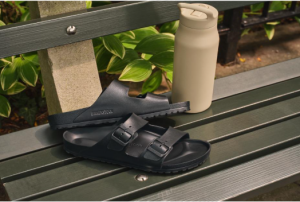
Once you have nailed the functional criteria, colour becomes the fun part. Men’s black sandals pair well with chinos, shorts, linen trousers, and virtually everything in between. A sleek men’s black sandal in a thong-style or strappy silhouette can carry you from a beach café to an evening terrace without looking out of place.
Neutral tones like tan, taupe, and grey offer similar versatility if you prefer a warmer palette. The Madrid style, a single-strap slide by Birkenstock, is a particularly easy grab-and-go option in any neutral shade and well-suited for a woman’s wardrobe.
5. The Break-In Window
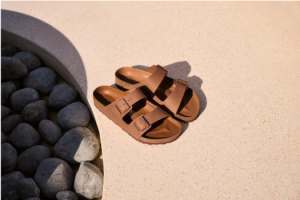
A well-made sandal should feel comfortable within the first hour, not the first fortnight. If you are wincing on day one, the fit is wrong, rather than the sandal needing time. Thong sandals and slide designs tend to have the shortest break-in period because they have fewer points of contact.
Sandals for men crafted from natural materials break in beautifully, softening and contouring to your foot’s exact shape until they feel less like footwear and more like a second skin.
The right sandal changes how you move through the day. Choose sandals for men with a supportive footbed, refine the fit through well-designed straps, and rely on a sturdy sole, and the rest follows naturally.